
Depression in Men: The Impact of Social Expectations
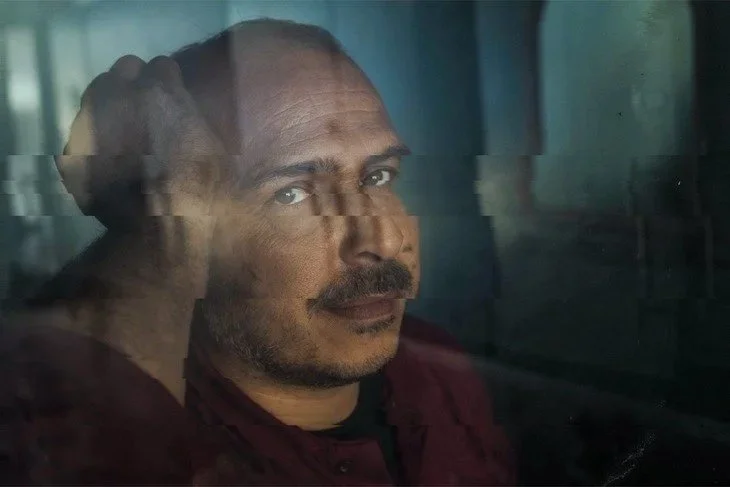
In therapy, men may not start with the word depression. Instead, some may talk about feeling diminished, unmotivated, or stuck. They may feel lost, disconnected from themselves, cut off from joy or pleasure. Even if they are functioning well in the world, they may feel isolated, irritated, filled with self-doubt or shame as they face their own limitations, have a hard time navigating relationships, or try to find a way to “figure things out.” Some men describe a life that has become strained, empty, or directionless. Difficulties in men’s mental health are often expressed as a loss of self-regard, loneliness, or vitality. All these experiences can be expressions of depression in men, which are both shaped and impacted by social expectations.
Depression is always indicative of other challenges, conflicts, or feelings experienced deep inside. It is not an isolated “symptom” that can be fully addressed by a targeted intervention, without understanding it in the context of the individual’s history, socialization, and personality. During in-depth therapy for men, some people may recognize their depression as stemming from the sense of falling short of social expectations, failing to become the person they were “supposed” to become. In other cases, depression may come from long forgotten longings or from ambivalence about feeling dependent, vulnerable, or “needy.” Men tend to keep these conflicts silent, as their recognition might be in itself a way of not meeting social notions of masculinity. As a result, they are frequently less likely to seek help for depression.
An Understandable Struggle
Social expectations do not remain outside the person, but are internalized. They can become rigid and oppressive aspirations, ideals, or impositions. They also tend to shape what men can bear to know about themselves and the emotions they allow themselves to feel and express. Masculinity is a vulnerable developmental process that takes place under pressure from cultural ideals of manhood and from enduring tensions around identification, dependency, and receptivity within male psychic life. As a result, some men experience “need” as dangerous and depressive withdrawal may become an attempt to preserve a sense of coherence.
Extreme masculine ideals can contribute to rigid psychic states and to splitting: whatever part of our individual personality, identity, or sense of self that does not fit the “ideal,” needs to be cast away, grown out of, or punished with shame. However, despite our conscious or unconscious efforts, what doesn’t fit doesn’t simply vanish or go away. It often returns in ways that might lead to feelings of depression: fear may return as self-attack, dependency as humiliation, and longing as deadness or resentment. Depression in men can feel particularly harsh from within, and is experienced less as open sorrow and more as inhibition or withdrawal. Men are not just in pain, but in a difficult and painful relation to the parts of themselves that have been rendered incompatible with “manhood” as they have learned to imagine it.
The cost of social expectations
Even though most men will think of it as a private event, depression is highly relational. Its sources are shaped by our early relationship, shaped within family life and social realities. It is in those relationships that men learn to negotiate the internal and the external. Some men may have learned that recognition could only follow achievement or stoicism; others, that need implied disappointment or punishment. Over time, lessons like these can consolidate into an inflexible and stern relationship with ourselves: we feel valued for what we can produce, parts of our personality become liabilities, failure becomes charged with shame, and rejection destabilizes our entire sense of self.
This is often the hidden burden carried by those who seek therapy for men. They are burdened by an internal regime that permits too little softness toward the self, narrowing the range of emotions that seem to fit with the internalized social expectations. Even the wish to be cared for may feel degrading, making men feel small, inadequate, not enough, and inevitably alone. Some men may defend against these feelings through withdrawal, leading to a chronic deadening of their inner life. Others, on the contrary, may rely more heavily on a search for power and admiration, masking fragility behind a façade of strength.
How therapy for men can help
In therapy for men, the task is not merely to expand the range of emotional expression, or to “take action” or “take charge.” The deeper goal is to understand the depressive organization of the self, the multiple layers and meanings underlying their lack of motivation, irritability, deadness, confusion, or stuckness. In therapy, men can, over time, take an honest yet compassionate look at their inner world, to make sense of the ways in which they were shaped by their past and by the social systems they have been part of.
Men can start to listen differently to their self-reproach, recognize how disappointment turns into shame, or how what they call laziness is saturated with despair. They may discover the protective function of emotional numbness, or the pain and longing that exists behind their attempts at “self-optimizing.” This is one reason why psychodynamic therapy for men can be important: it creates room to understand how external symptoms carry with them internal psychological meaning.
This process is not aimed at stripping away masculinity or turning men into someone they are not. The goal is to loosen the grip that internalized social expectations, among other dynamics and patterns, have on who men tell themselves they should be. Making space for exploring and redefining what masculinity means for them can ease the weight behind feelings of depression. The process of defining and becoming oneself -rather than the one society dictates- is ongoing. It involves shifting the relationship men have with themselves in order to create a life that feels more fulfilling and authentic.
If this speaks to something you or someone you love have been carrying inside, please reach out. Counseling for men can offer a space to think more freely, to feel more fully, and to begin living with compassion and courage.
*********
Photo credit: Talip Özer