
How Childhood Trauma Impacts Our Sense of Trust
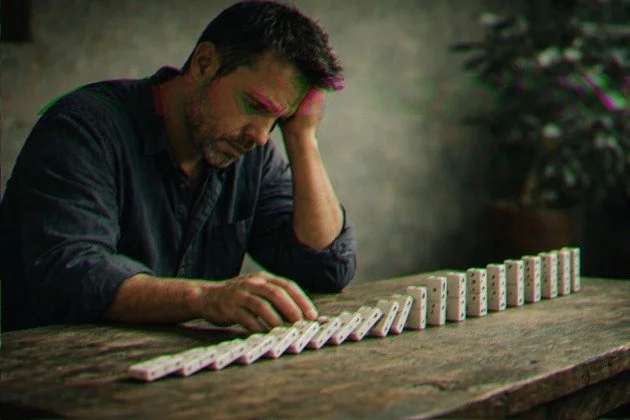
Many people come to therapy having a hard time trusting themselves or others. While not always their initial concern, these challenges lie underneath a wide range of issues, from people’s ability to be in relationships or overcome anxiety, to being able to live the life they want. To complicate things, trust issues can look very different from the outside: some people might seem overly dependent on others or unable to feel alive without external validation, while others may have crafted an entire personality that denies any dependence or vulnerability.
Trust is not a switch, something we either experience or we don’t. It’s also not a simple dial, something that grows or declines in a linear way. Trust is complex and has many layers. Trust in others, for example, may include how we anticipate people will respond to our needs, whether we believe they will tell us how they truly feel, or if we feel they will keep our best interest in mind. Trust in ourselves, on the other hand, may include trusting that our thoughts and emotions are meaningful and valuable, trusting that we will survive other people’s judgment or rejection, or trusting our capacity to make a difference in the world.
Trust does not develop in isolation; it is not something we can will ourselves to feel in the solitude of our own minds. Trust, including trust in ourselves, is relational, a capacity that unfolds from the moment we are born through our interactions with others. Psychologist Erik Erikson suggested that it is in the first 18 months of life when we start learning to trust -or not- that our caregivers will be responsive, consistent, and attuned.
Our entire emotional and psychological development is contingent on these experiences, as we learn what we can anticipate from others and what others anticipate from us. Trust is encouraged when we are allowed to struggle and feel supported through that struggle; it is compromised when those around us are absent, intrusive, or shape us -consciously or unconsciously- into the image they wish to see.
When early experiences are marked by trauma, whether in the form of abuse or neglect, the development of trust might be distorted and derailed. A childhood shaped by chronic and ongoing feelings of fear, unsafety, loneliness, helplessness, or despair may lead, in adulthood, to a life of disconnection from ourselves and others. We may learn to mistrust others’ intentions, doubt the genuineness of their care, or fear their needs will be suffocating or erase our own. We may also mistrust our gut, doubt and judge our reactions and our emotions, or diminish our sense of agency or worth.
Trust and Uncertainty
Trust is one of the ways humans find to live with uncertainty. None of us can ever fully know what others will do, what is in their mind and heart, how relationships will unfold, whether we will be seen, welcomed, or safe, if others will help us in our time of need, or whether we will succeed in what we attempt. Trust is a psychological bridge that allows us to move forward despite these uncertainties, by keeping us grounded in what we feel we can anticipate from ourselves, others, and the world.
When early experiences are marked by reliability, consistency, and responsiveness, uncertainty becomes tolerable. As children, we may learn that sometimes our needs will not be met immediately, but they will be at least recognized and responded to. Misattunement or conflict can be distressing, but they can also create an opportunity for connection and repair. We might feel frustrated and disappointed, but our feelings heard with genuine love and respect. Over time, these experiences shape internal expectations of others and support our sense of trust in ourselves.
Trauma alters this process, sometimes drastically. If a caregiver is frightening, neglectful, inconsistent, or overwhelmed, or if the environment is chaotic or unsafe, uncertainty becomes charged with danger. Uncertainty stops becoming a space that could be filled with possibility or imagination, instead turning into dreadful anticipation of something hurtful, frightening, or overwhelming.
In some cases, the challenge is not only to develop a sense of trust, but a deep mistrust in others and in our own experience might be instilled. Mistrust, after all, is another way to live with the unknown, by developing a certainty that we should not trust. Mistrust can also be a way to protect ourselves against pain, fear, or disappointment. Hypervigilance, control, avoidance, and emotional withdrawal can be seen as expressions of a deep mistrust instilled to manage the intolerable anxiety created by uncertainty. Needing to know is often an expression of our difficulty to trust.
How Trauma Impacts Trust in Others
If someone who was meant to nurture or protect us during our childhood was chronically harmful or neglectful, the conclusion is not usually “that person is unsafe.” What we learn from those experiences may not be limited to the specific caregiver, but give form to a relational template through which we learn to see the world. These templates might include not only an absence of trust, but active mistrust, leading us to read harmful intentions between the lines.
Trust or mistrust in others in the aftermath of trauma may have different layers. For example, it may impact our “epistemic trust,” defined as our belief in the reliability of the information we receive from others. When this is challenged, we have a hard time trusting what other people say, leaving us wondering about unspoken intentions or threats. Our sense of “relational trust” can also be compromised, making it difficult to trust whether others will care about us, recognize our value or our humanity. This is less about the words we hear people say, and more about what we believe is in their hearts.
In adulthood, these dynamics may reappear in subtle ways. We may expect betrayal or harm even when there is no clear evidence. Or we may distrust kindness and care, anticipating that they will be withdrawn or that they mask judgment, hatred, or aggression. As a result, some people may oscillate between longing for closeness and pulling away once intimacy deepens. Others preemptively reject, criticize, or detach from others to avoid being hurt. Because trust is relational, our feelings of trust in others will depend on the specific relationship we have with them, whether rooted in reality or in fantasy.
In trauma therapy with a psychoanalytic lens, these patterns are understood not as overreactions or distortions, but as deeply held relational templates, internalized expectations shaped by early experience. A lack of trust or active mistrust are there to be understood, not judged or “fixed,” since they are usually ways in which our psyche learned to protect itself. Our mind may interpret neutral expressions as hostile, distance as abandonment, or disagreement as rejection. It may repress or dissociate the pain from old wounds, or rely on mistrust as a way to organize our experience of a world that feels threatening or out of control.
Complex trauma therapy often involves working slowly with these patterns as you deepen your appreciation and understanding for how your relational templates developed over time. These templates can also emerge in the therapeutic relationship itself: you may wonder whether the therapist truly cares, whether they are judging you, whether they will leave. These concerns can be troubling, but they are an essential part of the work of therapy. As they become speakable, the possibility of a new relational experience begins to form, one in which mistrust can be understood rather than acted out or denied.
How Trauma Impacts Trust in Oneself
While the impact of childhood trauma on our trust in others tend to be more apparent, its impact on how we trust ourselves can be more insidious. We come to this world almost fully dependent on others to meet our needs and make sense of our experience. Those early attachments are so important that we often do whatever it takes to maintain them, even when those relationships are the source of pain, fear, disappointment, rejection, or despair.
Rather than recognizing our caregiver’s limitations, which would in itself feel overwhelming because of our dependance on them, we may develop a sense that there is something wrong with us. Through this desperate attempt to keep the attachment, we may internalize shame, anger, or helplessness. This is a powerful and tragic solution: if I am the problem, if I am the “bad” one, I can keep seeing my caregivers -who I need for my physical and emotional survival- as “good,” protect the relationship, and perhaps fix myself to make things right.
This is one of the ways in which trauma can undermine a sense of trust in ourselves. If our feelings were dismissed, minimized, or punished, we may have learned to doubt them, see ourselves as the source of the problem, and eventually become detached from them. We may not only question our own emotions, but in some cases live as if we didn’t have any. When our perceptions and experiences are denied, when we chronically hear things like “that didn’t happen,” “you’re too sensitive,” “you’re imagining things,” or “that’s not how you feel,” we may begin to mistrust your own sense of external and internal reality.
In adulthood, we may develop a deeply held sense of unworthiness and internal disconnection, perhaps wondering if we are too much or not enough. We may question whether we can trust our instincts and our experience, as we are surrounded by paralyzing questions: will I? could I? should I? am I allowed to? Indecisiveness is not necessarily indicative of a lack of trust in ourselves; after all, we may feel ambivalent or conflicted for many reasons. But when it shapes how we move through life, it might be an expression of a limited capacity to trust that disrupts our sense of agency. Even when opportunities arise, part of us may assume that our efforts will not matter.
In some cases, it might be hard to trust in our own emotional survival. I sometimes hear my patients feel afraid of confrontation, of speaking up for themselves, or showing vulnerability to the people in their life. What at first might appear to be a difficulty trusting that the other will listen, be receptive, or try to understand, often hides a fear trusting that we will be able to withstand and survive potential rejection or retaliation. The anticipation of repeating a scene we know too well may come with anticipation of falling apart of breaking down. Or, we might be wary about what we may find within ourselves, our own anger, grief, or desire, and not trust that we will be able to contain it.
In complex trauma therapy, a big part of the work may involve restoring the connection with your internal experience. Emotions are explored as meaningful communications rather than inconveniences to be managed. Thoughts and feelings are examined with curiosity rather than suspicion, at a pace that feels tolerable. Gradually, as you become more open to what you find inside and allow yourself to feel those hidden emotions, a different internal stance can unfold.
How Trauma Therapy Helps Rebuild Trust
One of the main challenges of addressing trust issues in therapy is that they are not always apparent or part how people think of themselves. Moreover, especially when we have experienced chronic relational trauma, they can become part of who we are, of how we organize our personality, and how experience ourselves and others. Much of this tends to be unconscious and look very different from the outside, because our minds will find very personal ways to navigate and handle a traumatic past.
For example, issues of trust may lie at the core of someone who is convinced that they are unlovable, that no matter how hard they try, they will never find someone who genuinely cares. Trust issues can make other people build a fortress of independence and a sense of superiority, as a way to protect and hide old feelings of longing and humiliation. Or, they can underlie turbulent relational patterns for people who feel constantly wronged and hurt by others, yet insisting in idealizing the next person they meet.
Because trust issues can run very deep and look very different on the surface, therapy to work through them takes time and patience. Psychoanalytic trauma therapy creates a space to understand how we came to be, to discover the painful reasons why the development of trust was thwarted, and, more importantly, to mourn the losses entailed in those experiences. Trust is not restored by reassurance alone. It develops through repeated experiences of reliability, attunement, and repair.
For this reason, it is important to keep in mind that trust towards the therapist is not to be assumed, particularly for people who have gone through painful traumatic experiences. It is ok not to fully trust your therapist at first. While most therapists will present themselves as trust-worthy (and the majority of them are), trust is not something that can be asked for blindly or that will emerge from good intentions. As complex trauma expert Judith Herman put it, “with people whose trust has been profoundly violated, building trust must be a goal rather than a precondition of treatment.”
I’m remembering here a former patient who, after a few sessions, was vulnerable enough to tell me, with some anxiety, that they didn’t trust me. My response was not to provide reassurance or question their experience, perhaps in an attempt to soothe my own discomfort. Instead, I said “Of course you don’t – how could you?” I knew enough about them to get a sense that, while they were hoping that therapy would help, they also feared that I will be another person who would be hurtful or disappointing. This kind of recognition is at the center what therapy can offer: an opportunity to experience and explore, in real time, the difficulties trusting yourself and others.
Trust does not develop all at once. It unfolds gradually, often unevenly and in non-linear ways. There may be setbacks and renewed doubts in what Herman calls “a painstaking process of trial and error, breach and repair.” Trust issues may lie in the deep corners of our psyche, so they cannot truly be worked through by staying at the surface, whether through positive affirmations or sheer force of will. Trust emerges in relationships and is borne out of experience. After trauma, it can be a hard-earned step towards a life that feels more purposeful, intentional, authentic, and fulfilling.